How much does website downtime cost small businesses?

unsplash.com/@joshua_hoehne
Most small business owners discover their website is down the same way: a customer tells them, or they happen to check. By that point, the site may have been down for hours.
The financial impact of that kind of downtime is easy to underestimate because the losses are often invisible. No error message lands in your inbox. No till rings zero. Things just quietly stop.
The direct costs
The most obvious cost is lost revenue. If visitors cannot access your site, they cannot buy, book, or enquire. For an e-commerce store this is immediate and measurable. For a service business it is harder to see but just as real: a potential customer searching for a local plumber, accountant, or salon clicks your link, gets an error, and clicks the next result instead.
That lead is gone. You will never know they visited.
For context, think about your own site: how many visitors do you get in a day, and what percentage typically get in touch or make a purchase? Even a conservative conversion rate multiplied by a few hours of downtime adds up quickly.
The indirect costs
Beyond lost sales, downtime creates a second layer of damage that is harder to reverse.
Reputation: if a customer visits your site and finds it down, their confidence in your business drops. This is especially damaging if they were referred by someone or were close to making a decision. A broken website suggests a business that is either struggling or not paying attention.
SEO impact: Google crawls websites regularly. If Googlebot visits while your site is down and receives an error, it notes this. Extended or repeated downtime can affect how often Google crawls your site and, eventually, how it ranks your pages.
Staff time: every outage creates a fire to put out. Someone has to contact the host, wait on hold, diagnose the issue, and monitor the recovery. That time has a cost even if it does not appear on an invoice.
A simple way to think about your risk
Rather than trying to match your situation to enterprise-level downtime statistics, which run into millions and are not relevant to most small businesses, it is more useful to do a quick calculation for your own site.
Take a typical trading day. Estimate how many visitors your site gets and roughly what percentage contact you or make a purchase. Now multiply your average order or enquiry value by the number of conversions you would expect in, say, two hours.
That is approximately what a two-hour outage costs you in direct revenue. Add the less visible costs and the real figure is higher.
Why most downtime goes undetected
The uncomfortable truth is that most small business owners have no way of knowing when their site goes down unless someone tells them.
Hosting providers do not typically alert you when your site is down, only when there is a wider infrastructure issue. Checking your own site manually every few hours is not practical. If your site goes down at 11pm and comes back up at 3am, you may never know it happened, even though you lost four hours of potential traffic.
This is why uptime monitoring exists. A monitoring service checks your site every minute or every few minutes, around the clock, and sends you an alert the moment something goes wrong. Instead of finding out hours later, you find out within minutes.
What good looks like
Most well-run websites target 99.9% uptime, which works out to about 8 hours and 45 minutes of downtime per year. Shared hosting providers often quote this figure, but what they mean is infrastructure uptime, not your specific site.
In practice, many small business websites experience more downtime than this due to plugin conflicts, failed updates, traffic spikes, or hosting issues. Without monitoring, there is no way to know.
Keeping the cost manageable
You cannot prevent every outage. Servers fail, updates break things, and hosting providers have their own problems. What you can control is how quickly you find out and respond.
The difference between a two-minute outage and a two-hour outage is almost always whether someone was alerted immediately or found out by accident. Fast detection means fast recovery, and fast recovery means the damage stays small.
Frequently asked questions
How much does website downtime cost a small business?
It depends on your traffic and conversion rate, but even modest sites lose money during downtime through missed enquiries, lost sales, and damaged trust. A simple way to estimate your own risk: calculate how many conversions you would expect in two hours and multiply by your average order or lead value.
How do I know if my website has been down?
Most small business owners only find out when a customer tells them. Uptime monitoring services check your site every minute and send an alert the moment it goes down, so you find out within minutes rather than hours.
Does website downtime affect Google rankings?
Repeated or extended downtime can affect how Google crawls your site. If Googlebot visits during an outage and receives an error, it logs this. Frequent downtime may reduce how often Google crawls your pages and can eventually affect your rankings.
What is a good uptime percentage for a small business website?
99.9% uptime is the standard target, which works out to under 9 hours of downtime per year. Many shared hosting plans quote this figure, but it refers to their infrastructure rather than your specific site. Monitoring your own site is the only way to know your actual uptime.
Monitor your website for free
Get instant alerts when your site goes down. No credit card needed.
Start monitoring free →More from the blog
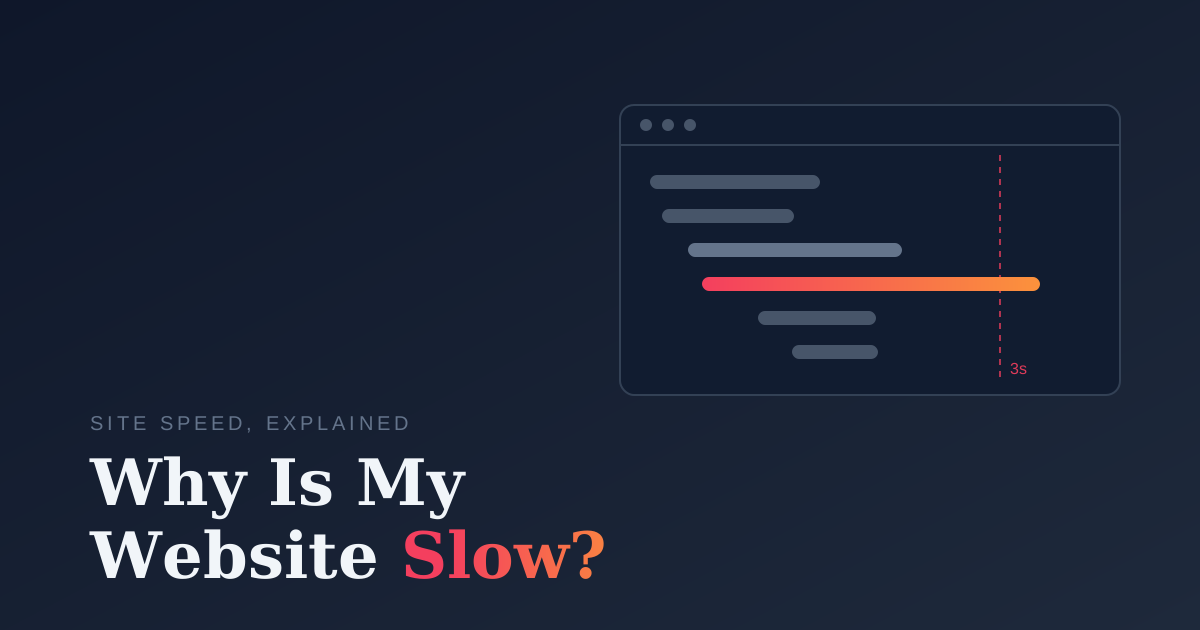
Why Is My Website Slow?
Slow sites are rarely mysterious. It's nearly always images nobody compressed, third-party scripts you forgot about, and a server having a bad day, stacked on top of each other. Here's how to find yours.
19 August 2026

The Non-Technical Guide to SEO
Most SEO explanations are either uselessly vague or drown you in schema markup before you know why any of it matters. This is the high-level version: how Google actually decides what to rank, why speed is the most underrated factor going, and how the technical, on-page, and reputation layers fit together. Read it once and you'll be able to look at any website and tell whether it's doing SEO well.
25 July 2026

What is an SSL certificate and does my website need one?
That padlock in your browser's address bar is an SSL certificate. Without one, browsers warn visitors your site is not secure, Google ranks you lower, and customer data is at risk. Here is what you actually need to know.
16 July 2026